Step No.1
Note
by now you should have some kind of unique routine in your mind through which you follow the training.
I'm not gonna repost the exercises of the previous levels in favor of the aesthetics of the program. But it doesn't mean you stop practicing them. If it's not in your system already, you can always go back to steps # 5-7 of the previous level to access all the movements.
The Aim
The aim of the practice is to create a balance between aspects of movement, like flexibility, balance, strength, coordination, sensitivity, and more.
These qualities can't be achieved with specific instruction. For example, doing 10 reps of rolling to get it. That's where your Independence comes into the picture. My role is to teach you to think for yourself I'm not saying that you are stupid, rather, the more I chew for you the more dependent and less engaged with the material you will become.
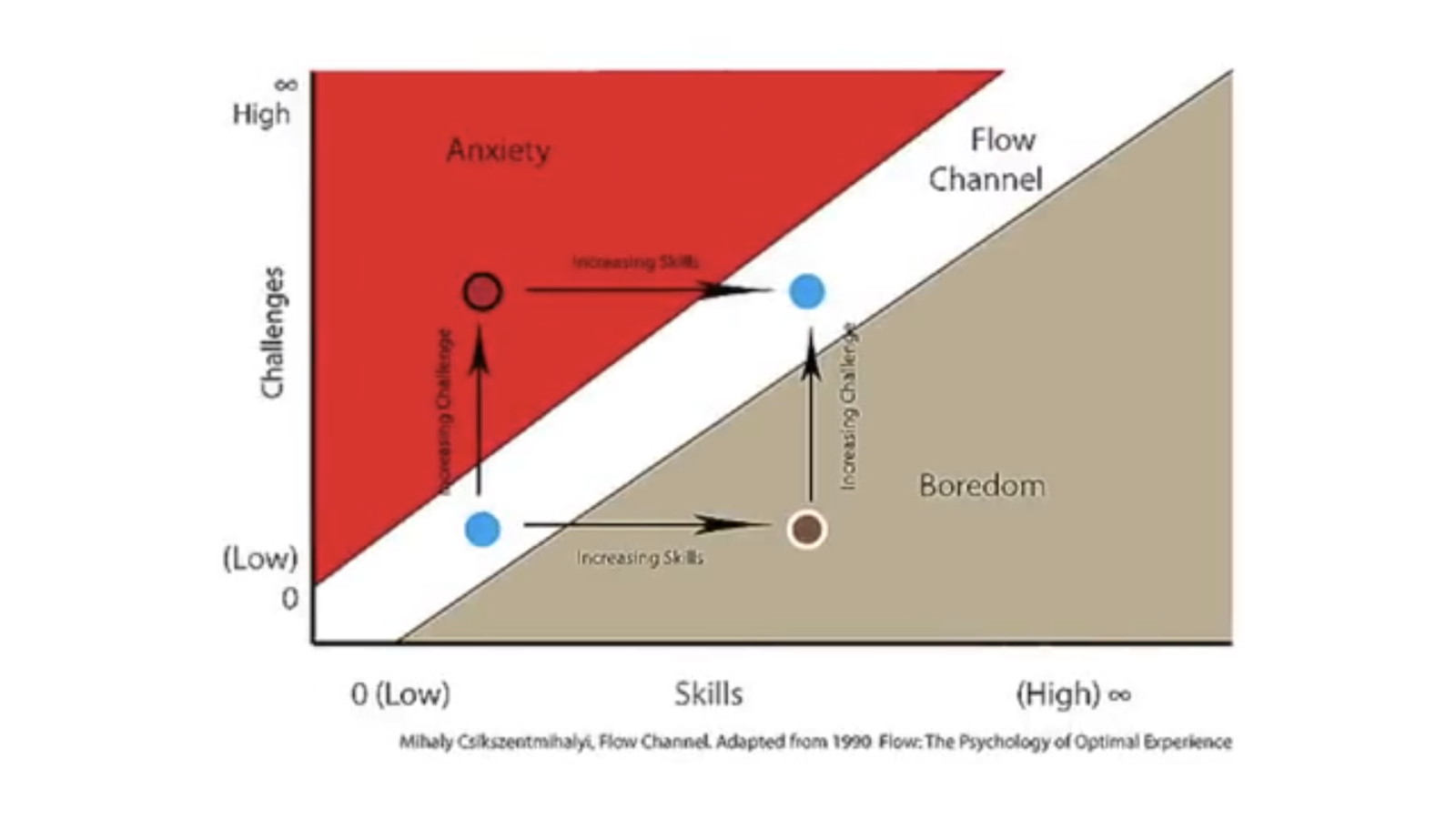
Don't be afraid of the challenge of organizing the training
The Balance Principle
The balance principle is an outcome of the fact that our body is adapting to what we do, this means that if for a long time we will perform a certain function the body will reshape to adjust to this function.
If sitting on a chair is the function, certain joints and muscles will become shorter and other muscles will become longer. In conclusion, incomplete patterns will take the body out of balance. Therefore, this week we are going to learn the basic structure that gives you feedback about the condition of your body - go-to structures.
Fundamental Bend
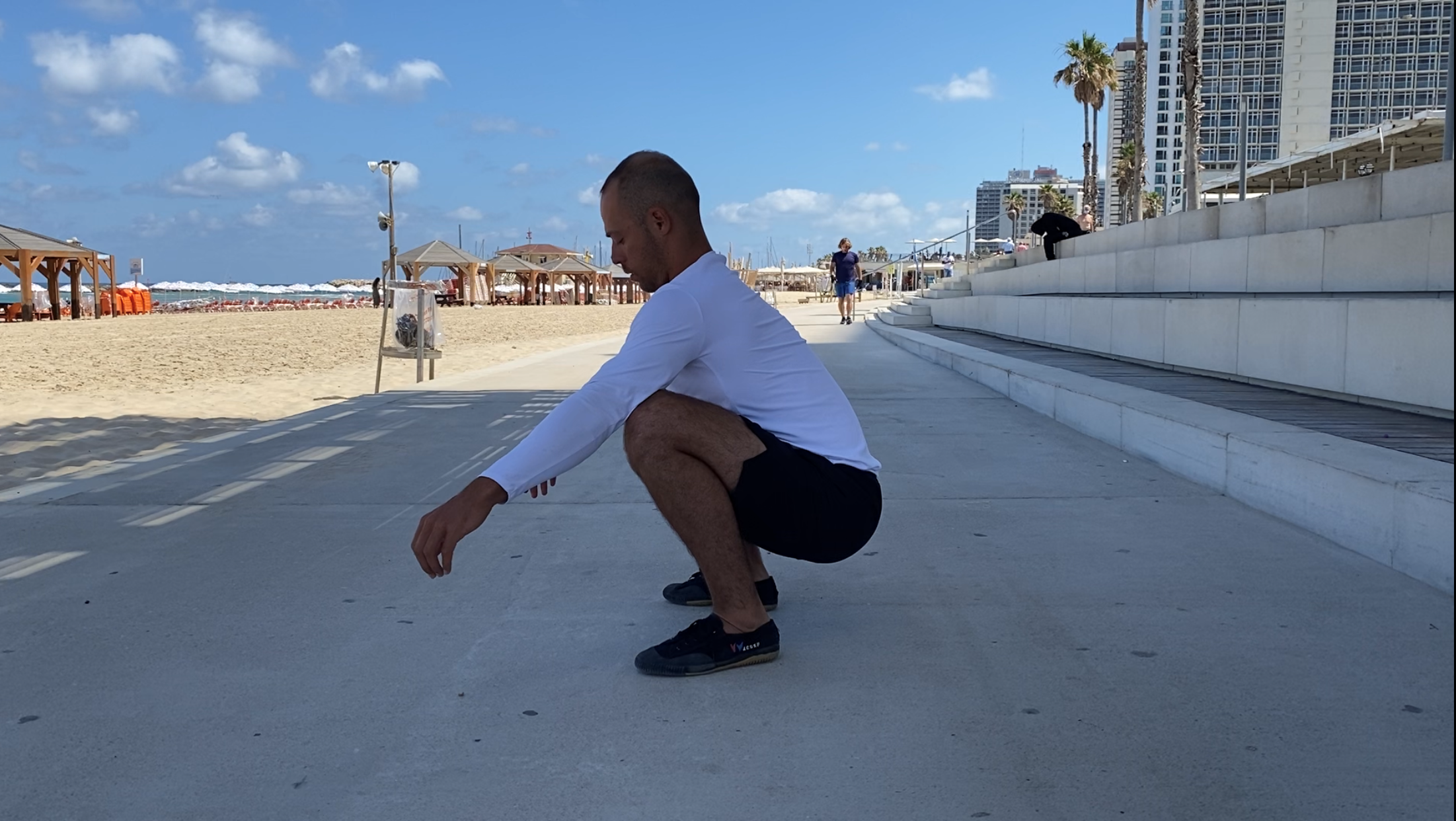
Squat
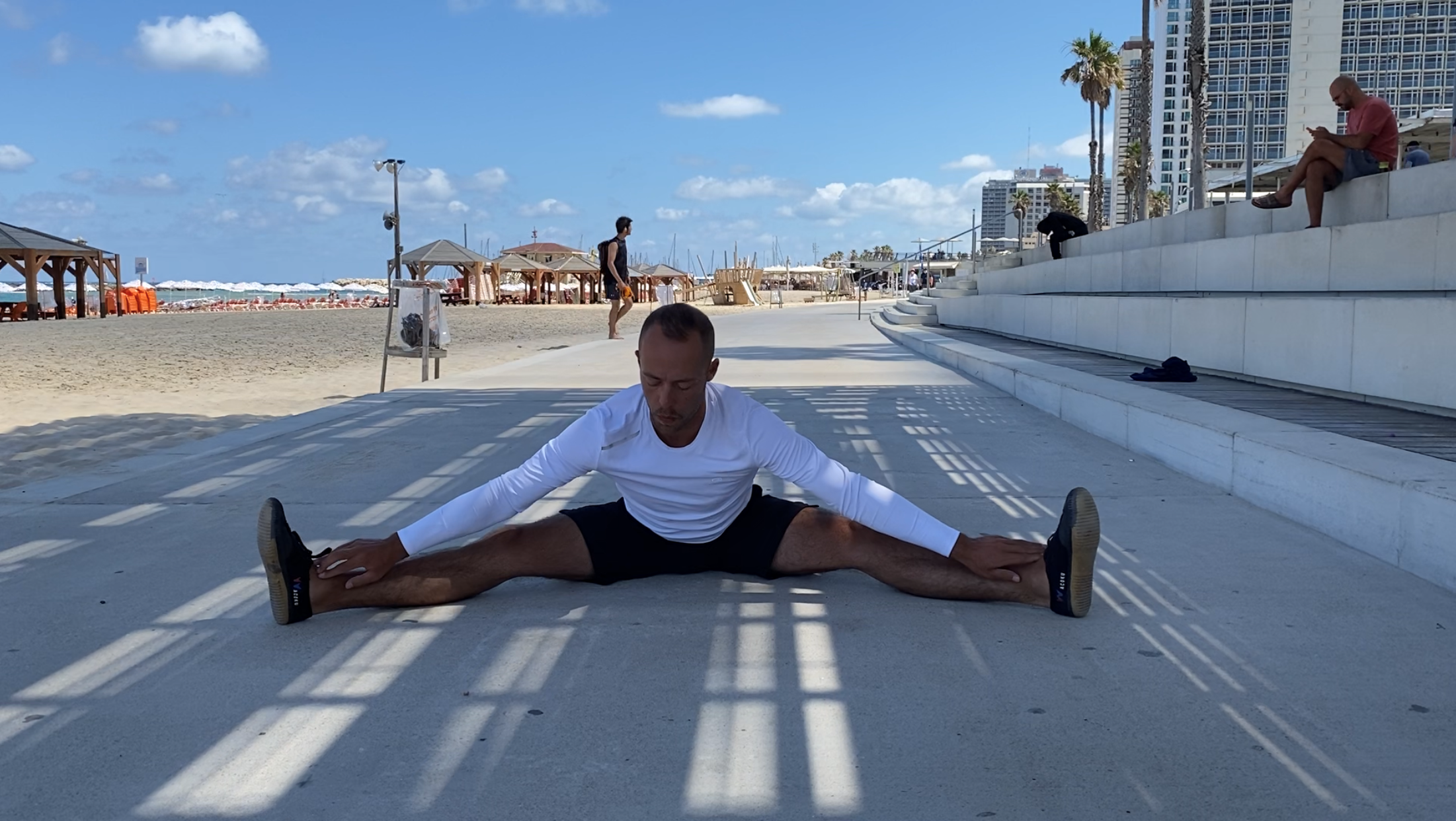
Split and rotate
Bend forward
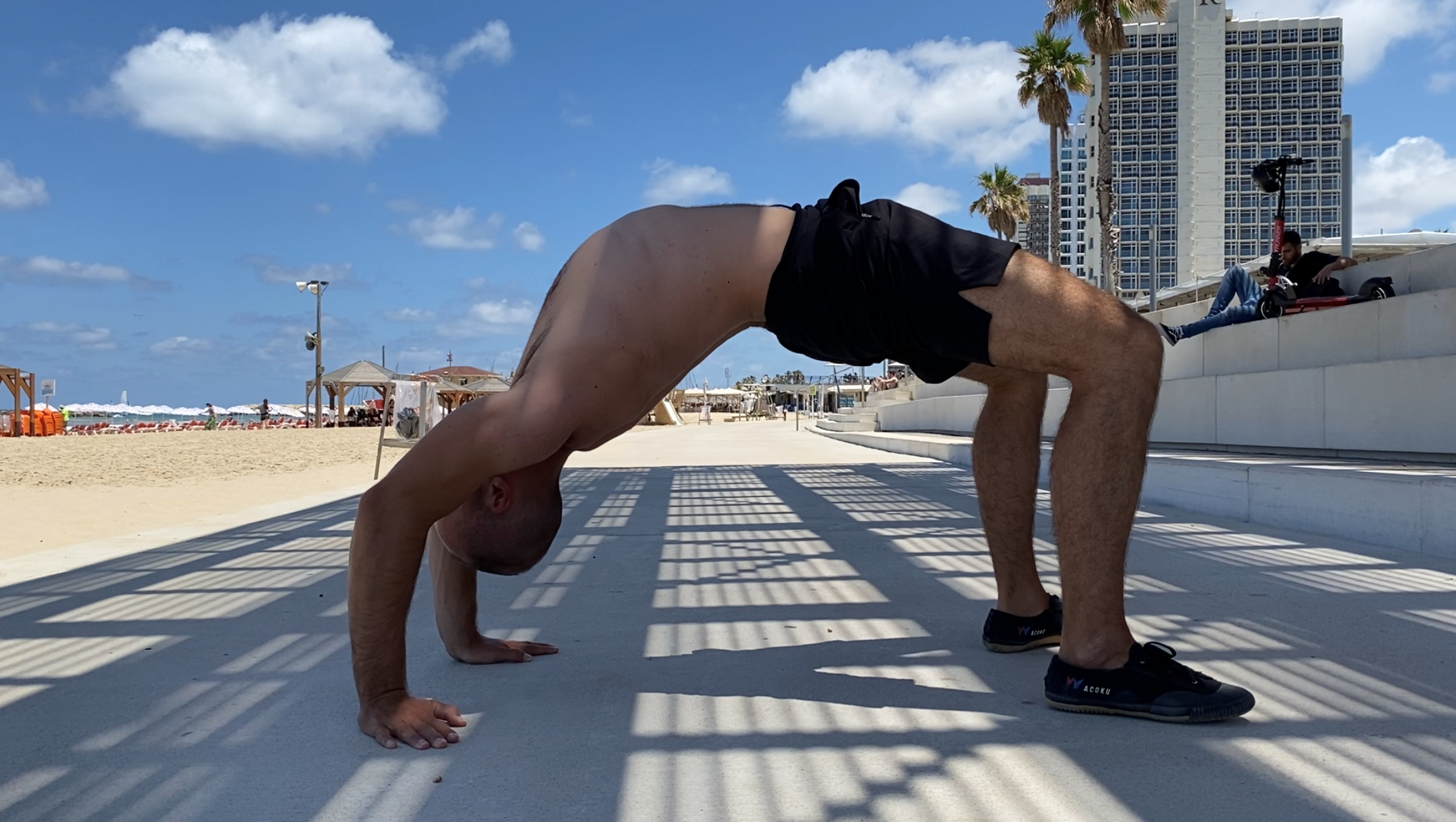
Bend backward bridge
These are the extreme bends of our joints, squat, split, forward bend, Bend backward (bridge), those are also the fundamental postures of the body. Using these postures you can check if you have the full range of motion in order to be able to transition through the 5 levels of motion ( lying, sitting, standing, jumping, inverting) effectively.
If you are lacking the range in one of these poses it will affect your ability to move freely.

Application of the principle
Take a picture of you at those postures
Analyze them. see where you are lacking the necessary range
Work deliberately on increasing the range of motion at this joint
PRACTICE
Learning Phase
1. Zen warm-up
2. FSP
2. DSR
Challenge:
High Cartwheel & Combinations: